How to Choose an HVAC Contractor in New Braunfels
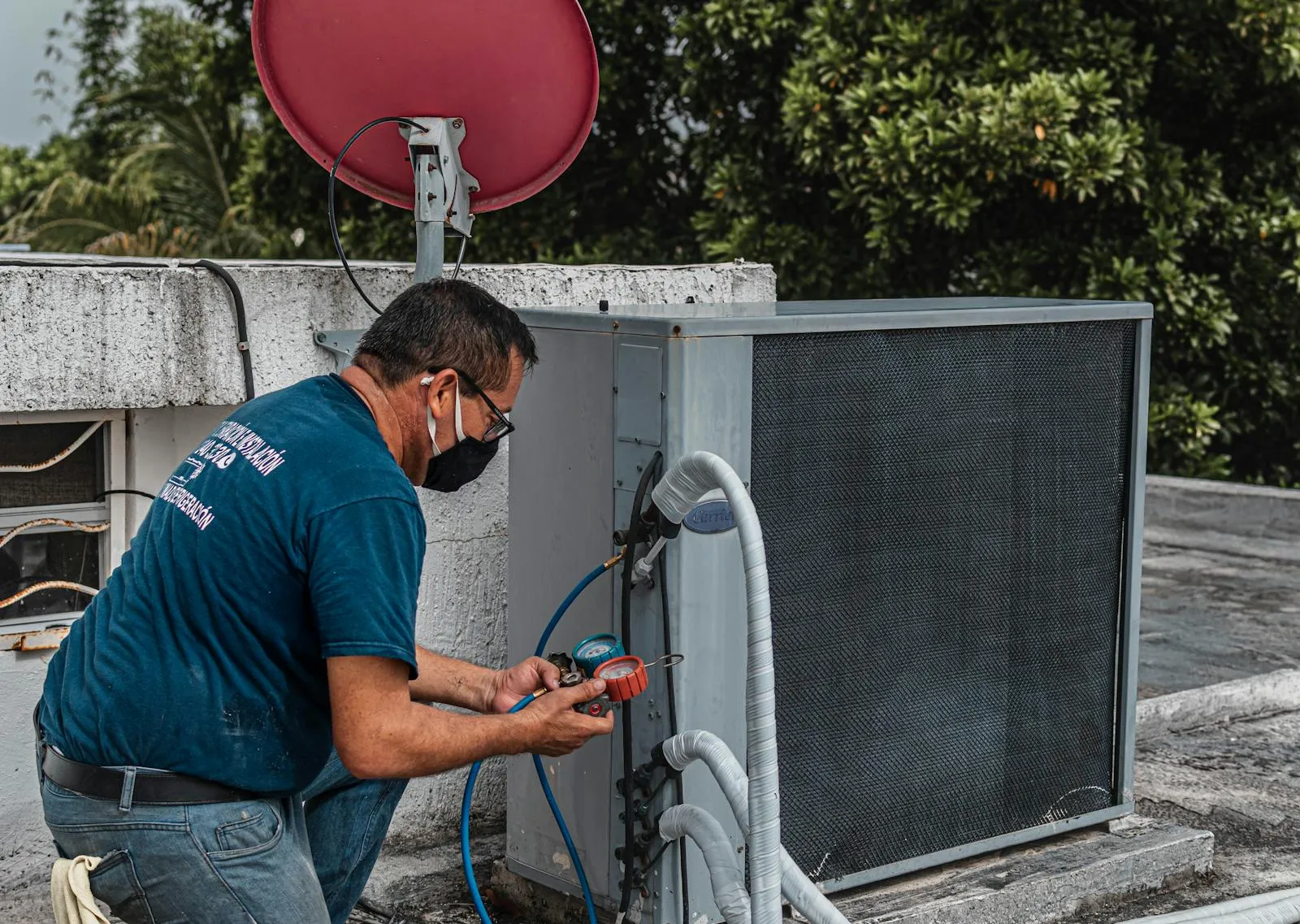
How do I verify an HVAC contractor's license in Texas?
Search the contractor on our license-verification page, or go straight to the state's TDLR database, and confirm the status shows Active with a current expiration date. Every HVAC contractor in Texas must hold a license from the Texas Department of Licensing and Regulation (TDLR), in one of two classes. tdlr.texas.gov (TDLR licensing)
- TACLA (Class A) — any size system, including commercial.
- TACLB (Class B) — residential and light commercial systems under 25 tons.
A clean verification looks like an active TDLR record, for example a TACLA The two Texas HVAC contractor license classes. Class A (TACLA) covers any size system; Class B (TACLB) covers homes and light commercial. Either is fine for a house. Full definition license active through 2027. If the name on the license does not match the company name on the truck, treat it as a red flag.
Check any HVAC contractor's Texas license
Using an unlicensed contractor can void your equipment warranty and leave you with no recourse. Verifying takes two minutes, and it is free.
See every licensed A/C contractor in the New Braunfels area, with status and license number. Prefer to check a specific license yourself? Here's how .
What certifications should an HVAC contractor have?
Look for two credentials on top of the TDLR license: NATE and EPA Section 608. NATE is a leading voluntary technician certification. EPA Section 608 is federally required for any technician who handles refrigerants, including R-410A and its replacements. Neither replaces the license. natex.org (NATE certification)
NATE A voluntary technician credential (North American Technician Excellence) on top of the required state license. A plus, not a substitute for the license. Full definition (North American Technician Excellence)
A voluntary industry credential requiring technicians to pass standardized exams. It is a quality signal on top of the required license, not a substitute for it. Not every licensed contractor holds it; the best ones do. Verify at natex.org.
EPA Section 608 A federal certification any technician must hold to legally handle refrigerant. Required by law, not optional. Full definition
A federal requirement for any technician handling refrigerants. It applies to all refrigerant types, including R-410A and its replacements.
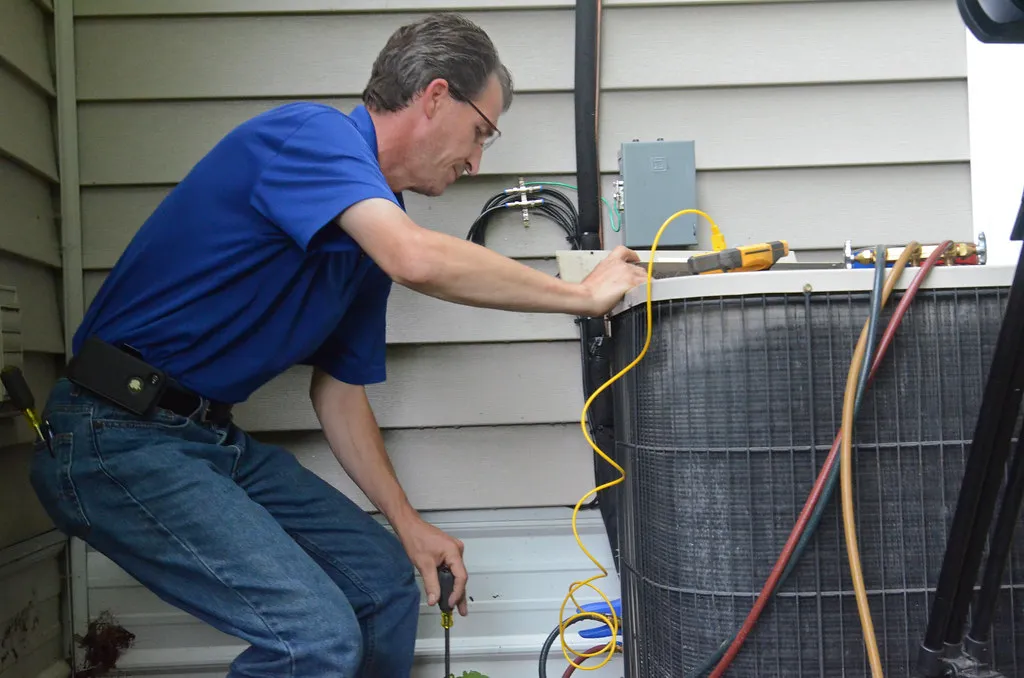
A licensed, NATE-certified technician on a residential service call. The credentials above are what separate this from an unlicensed handyman working out of a truck.
What should a complete HVAC estimate include?
A complete estimate is itemized: equipment make, model, and SEER2 rating; labor; the local mechanical permit fee as a line item; old-system disposal; and manufacturer and contractor warranties stated separately. An itemized written estimate is what lets you compare bids fairly, so treat a vague lump sum as a warning sign. The FTC advises getting estimates in writing before you hire. FTC (hiring a contractor)
- Equipment Make, model, and SEER2 rating
- Labor Hours and any subcontractors
- Permit Local mechanical permit fee, line-itemed
- Disposal Removal and haul-away of the old unit
- Warranties Equipment and labor, stated separately
- Lump-sum quote with no line items
- No permit fee listed (means no permit is being pulled)
- Pressure to sign the same day
- A price drastically lower than other quotes
What SEER2 rating is worth paying for in Texas?
The legal minimum for new split-system air conditioners in Texas is 14.3 SEER2, the DOE standard that replaced SEER on January 1, 2023 — not 15.2, which is the Energy Star threshold. Higher ratings cut monthly energy costs, and over an 18-year system life the best-available 23.5 SEER2 tier saves about $6,724 versus base efficiency per DOE data. energy.gov (DOE/FEMP)
| Efficiency tier | SEER2 rating | Lifetime savings |
|---|---|---|
| Base (minimum) | 13.4 SEER2 | — |
| Energy Star | 15.2 SEER2 | $1,853 |
| Best available | 23.5 SEER2 | $6,724 |
Over an 18-year system life, efficiency and reliability matter more than the sticker price. A unit at the legal minimum costs less today, but the best-available tier saves roughly $6,724 in energy over that lifespan, so the cheapest quote is rarely the lowest total cost of ownership.
What should I ask about post-installation support?
Before you sign, ask whether the company regularly serves New Braunfels, what its response-time policy is for urgent summer calls, and what the maintenance plan covers. In a Central Texas summer, a contractor who is slow to answer an emergency call is the difference between a same-day fix and days without cooling, so responsiveness is worth weighing alongside price. ENERGY STAR (maintenance checklist)
- Does the company regularly serve New Braunfels, or is it stretching from San Antonio or Austin?
- What is the response-time policy for urgent summer calls?
- What does the maintenance plan include, and is it binding or month-to-month?
Once you have a shortlist, work through the move-in and decision steps in our new homeowner HVAC guide to know exactly what to check before your first Texas summer.